2 June 2026
What Are Hops? A Complete Guide
If malt gives beer its body and sweetness, hops are what give beer its personality. From the crisp bitterness of a traditional English bitter to the tropical fruit explosion of a modern hazy IPA, hops are arguably the most important ingredient that most dramatically shapes how a beer smells, tastes, and feels. Understanding them unlocks a new level of appreciation for almost every beer you'll ever drink. Hop in for the ride.
What are hops?
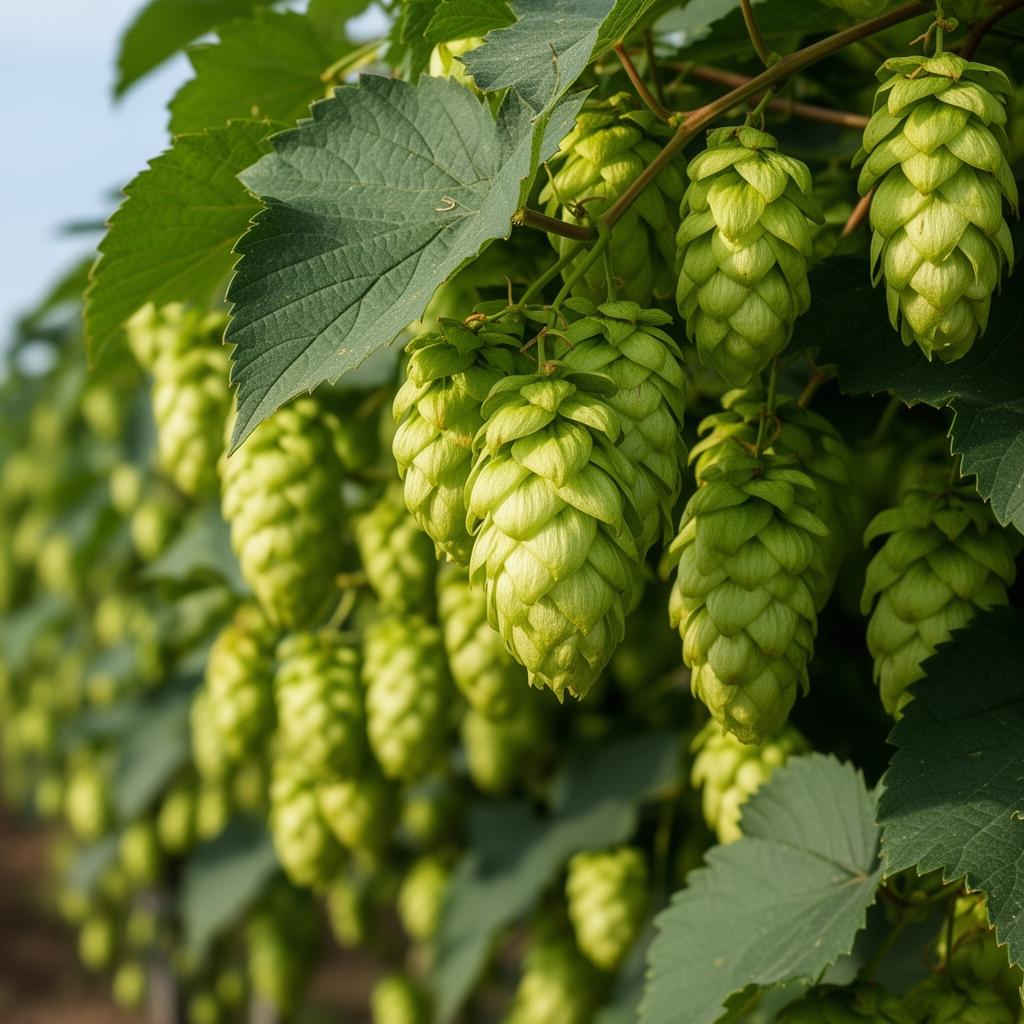
Hops are the cone-shaped flowers of Humulus lupulus, a climbing plant related to hemp and nettles that thrives in temperate climates. The plants regrow every spring and produce shoots that develop into 'bines', and the bines produce hop cones, which are harvested in the autumn. Inside those cones are two things that matter enormously to brewers: alpha acids (which create bitterness when boiled) and essential oils (which create aroma and flavour).
In brewing, hops serve three distinct purposes:
- Bitterness — alpha acids isomerise during the boil, balancing the sweetness of the malt and giving beer its structure
- Flavour and aroma — essential oils produce the citrus, tropical, earthy, and floral notes you taste and smell
- Preservation — hops have natural antimicrobial properties that help stabilise beer and extend its shelf life (historically very important; less critical now with modern refrigeration)
Without hops, beer would taste cloyingly sweet and lack complexity. It's not an exaggeration to say hops are the single most expressive ingredient a brewer works with.
Where are hops grown?
Hops need a specific climate; good sunlight, well-drained soil, and relatively cool summers. They grow best between about 35° and 55° latitude in both hemispheres. The world's key hop-growing regions are:
- United Kingdom — Kent (historically the heart of British hop growing) and Herefordshire. Classic British varieties like East Kent Goldings have been grown in Kent since the 16th century.
- USA — The Yakima Valley in Washington state is the most important American hop region, followed by Oregon and Idaho. American hops drove the craft beer revolution.
- Germany — The Hallertau region in Bavaria is the world's largest hop-growing area, producing the noble varieties that define German lager and wheat beer.
- New Zealand and Australia — Smaller but increasingly significant regions producing some of the most expressive and sought-after modern varieties.
When Berkshire breweries like Loddon Brewery and Windsor & Eton Brewery produce classic British ales, they often use English hops grown in Kent or Herefordshire — the same heritage varieties that have defined British beer for centuries.
How hops are used in brewing
When and how you add hops is just as important as which hops you choose — and this is where the art of brewing really comes into play.
Bittering additions (early boil)
Added at the start of the boil, typically 60–90 minutes before the end. At this point, heat transforms the alpha acids into bitter compounds. The long boil drives off the delicate aromatic oils, so these hops contribute bitterness but little flavour or aroma. This gives the beer its structural backbone.
Flavour and aroma additions (late boil)
Added in the final 5–20 minutes of the boil, or at flameout (the moment the heat is turned off). At these lower temperatures and shorter times, the alpha acids don't fully isomerise, so bitterness contribution is lower. But the essential oils — responsible for aroma and flavour — are preserved. This is where citrus, tropical fruit, and floral character enters the beer.
Dry hopping (during or post-fermentation)
One of the defining techniques of modern craft beer. Hops are added to the fermenter or conditioning tank after primary fermentation is complete, often for several days. Because there's no heat, the aromatic oils dissolve directly into the beer without any bitterness addition. The result is intensely fragrant, juicy, and aromatic beer — which is why NEIPAs smell like you've just peeled a mango.
This is exactly why the same hop variety can produce completely different results depending on when it's added.
Hop varieties and what they taste like
There are hundreds of commercial hop varieties, and new ones are developed every year. They broadly fall into four regional families.
Traditional British hops
Examples: East Kent Goldings, Fuggles, Target, Bramling Cross
These are the hops that built British beer. Earthy, herbal, lightly floral, and slightly spicy — they provide balance and subtlety rather than intensity. They're the backbone of traditional bitters, porters, and stouts, and you can taste their influence in the classic ales from breweries such as Loddon Brewery. East Kent Goldings in particular has been cultivated in Kent for over 200 years.
Noble European hops
Examples: Saaz (Czech Republic), Hallertau (Germany), Tettnang (Germany)
Mild, elegant, and clean — these hops give European lagers and pilsners their characteristic crisp bitterness and gentle floral, herbal character. Saaz is the defining hop in Czech Pilsner; Hallertau in German lager. Lower alpha acid content, subtle and refined.
American "new world" hops
Examples: Citra, Cascade, Mosaic, Simcoe, Amarillo
The hops that sparked the craft beer revolution. High in alpha acids and intensely aromatic — big citrus notes (grapefruit, lemon, orange), tropical fruit (mango, pineapple, passionfruit), pine, and resin. These dominate IPAs and pale ales across the world today. Berkshire breweries like Elusive Brewing and Renegade Brewery make excellent use of these varieties.
A note on Citra — this single variety has probably done more to define modern IPA than any other hop. It produces extraordinarily intense lime, lychee, and tropical fruit aromas, and is used in a huge proportion of the NEIPAs and pale ales you'll find in craft beer shops today.
New Zealand and Southern Hemisphere hops
Examples: Nelson Sauvin, Galaxy (Australia), Motueka (NZ)
The most expressive, unusual, and increasingly sought-after hop family. Nelson Sauvin smells unmistakably of white wine and gooseberry; Galaxy produces passionfruit and citrus of extraordinary intensity. These are hops that make even experienced drinkers stop and double-check what they're drinking — they can seem almost more fruit than beer.
How hops match beer styles
| Beer style | Typical hop character |
|---|---|
| Traditional bitter / real ale | Earthy, herbal British hops; balanced and subtle |
| English IPA | Floral, lightly citrus British or classic American varieties |
| West Coast IPA | Bold citrus, pine, and resin from American hops |
| Hazy NEIPA | Intense tropical fruit from heavy dry-hopping with Citra, Mosaic, Galaxy |
| German lager / pilsner | Clean, mild spice from noble European hops |
| Stout / porter | Subtle British hops; malt dominates, hops provide balance |
| Sour beer | Hops play a minor role; used more for balance than flavour |
Final thoughts
Hops are the soul of modern craft beer — and the more you pay attention to them, the more you'll get from every pint. They're what make two IPAs taste completely different, why some beers smell like a bowl of tropical fruit and others like a pine forest, and why brewers can produce an almost infinite range of flavours from four basic ingredients.
Next time you try a beer, take a moment to think about the hops: what varieties are used, when they were added, and what character they've brought. Once you start noticing, you'll never drink beer the same way again.